How to Style a Coffee Table Without Making It Look Cluttered
A simple formula for styling a coffee table that looks designed, not cluttered — the tray method, height rules, and what to actually leave on it.

A simple formula for styling a coffee table that looks designed, not cluttered — the tray method, height rules, and what to actually leave on it.
My coffee table went through a chaotic year. At one point it had 11 objects on it — remotes, three coasters, two candles, a magazine, a bowl of Biscuit's treats, a plant, a half-read book, and a single sock. My husband would walk in, look at it, and sigh. I realized I needed a system, not more "pretty decor."
Styling a coffee table is less about what you put on it and more about what you agree to take off. Here's the whole thing.
The quickest way to make a coffee table look designed: limit it to three "vignettes" or groupings, each with a different height. That's it. Three zones. Everything else has to live somewhere else — a basket under the table, a drawer, a shelf.
Classic combinations:
If you find yourself adding a fourth grouping, you're cluttering. Step back.
The best trick I ever learned: buy a tray. Anchor the whole right side of the table with it. Everything on the tray reads as "intentional grouping" instead of "random stuff." Remotes, coasters, lighters — contained in a tray, they look curated.
I like wood trays with handles for warmth. Rattan trays for summer. Marble trays for a more formal living room. Thrift stores are full of them — I have three for under $20 total from Goodwill.
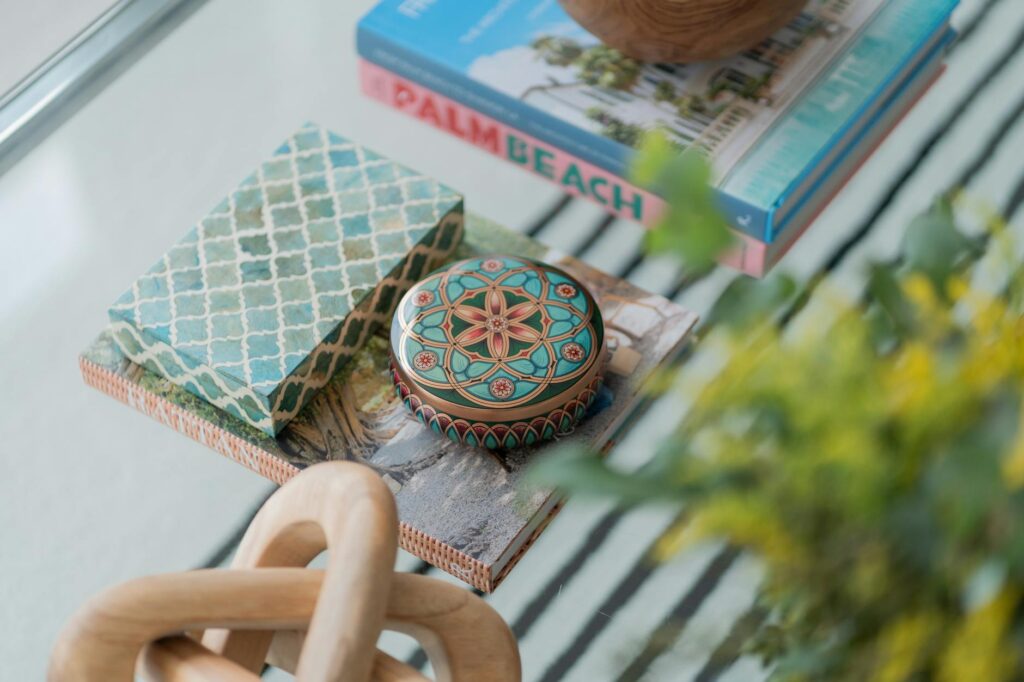
Big coffee table books do two things: add height, and signal that you have interests. Two books is enough — a stack of four is starting to look like a library.
Picks I actually use, not just for looks:
Stack them with the fat one on the bottom, smaller on top. Angle them slightly off-center for a little movement instead of perfectly square.
The single biggest visual mistake is putting three things of the same height next to each other. Looks like a lineup. You want a short thing, a mid thing, a tall thing — like a mountain range.
Your eye needs to move. Matching heights kill the movement.
A living or "was recently living" object keeps a coffee table from feeling static. A small potted plant, a glass of greenery from the yard, a single stem in a bud vase, a bowl of seasonal fruit. If you can't keep plants alive (no judgment), dried pampas or eucalyptus works forever.
I swap mine out seasonally — I have a post on DIY fall wreath ideas that kind of applies here too. Seasonal swaps keep the whole room feeling fresh without needing new decor.
Remotes. If you do nothing else I say, put them in a drawer, a basket, or on the tray. Naked remotes on a coffee table instantly read as "lived in" in the unhelpful way, not the cozy way.
Also: chargers, cables, phone. Hide them. Charge your phone somewhere else — ideally not in the living room.
Every Sunday evening, I clear the entire coffee table off, wipe it down, and restyle from scratch. Takes 5 minutes. This stops the slow creep of "one more mug" and "just one more magazine" that turns a styled table into chaos by Thursday.
Same idea applies to mantels, console tables, and kitchen counters. Weekly reset. The discipline is more important than the styling choices.
One single tray with one grouping. Don't try to split it into zones — it'll look cramped. A tray with a small stack of books, a candle, and a tiny plant is enough.
Two or three zones. The classic three-vignette setup works well.
Anchor it with a runner or a long tray down the center, then two or three vignettes along it. Otherwise a huge coffee table looks empty.
Round tables fight the "zone" idea. Put one strong centerpiece in the middle (tray with arrangement, or a single sculptural piece) and let it breathe. Don't try to ring the edge with objects.
I've gotten most of my coffee table pieces for under $5 each at thrift stores and estate sales. Ceramic dishes, small wooden bowls, vintage books, brass candlesticks, weird little sculptures. Mix in one or two newer items to anchor the style, and thrifted fills out the rest. My post on how to find furniture at thrift stores applies to smaller stuff too.
You'll get to a point where your coffee table looks better than it ever has. Everyone will think you paid someone. You paid $0.
If you tackled this, send me a photo. Seriously.
Tag me @diy.queen or email [email protected]