Chalk Paint vs Milk Paint: Which One Should You Actually Use?
The real differences between chalk paint and milk paint — durability, finish, prep, and when each one makes your furniture flip look cheap vs. custom.

The real differences between chalk paint and milk paint — durability, finish, prep, and when each one makes your furniture flip look cheap vs. custom.
I had an old pine hutch sitting in my garage for a year because I couldn't decide whether to chalk paint it or milk paint it. I finally did half and half as an experiment — same piece, same day, same room — and the results were different enough that I've been recommending the comparison to everyone who asks. Here's what I figured out.
Chalk paint is a ready-to-go, pre-mixed, water-based paint with calcium carbonate or a similar mineral added for grip and that signature matte finish. Milk paint is a centuries-old recipe made from casein (literally milk protein), lime, and natural pigments — it usually comes as a powder you mix with water. If you're new to this technique, a beginner's guide on how to chalk paint furniture can offer valuable insights.
That sounds like trivia, but it changes everything: how it goes on, how it ages, how it chips, and what piece you'd pick it for.
Chalk paint dries to a uniform, velvety matte. Color coverage is consistent. Milk paint dries more variable — sometimes streaky, sometimes slightly iridescent, with patches that look darker or lighter depending on how the wood absorbed it. Some people hate this. I love it on the right piece.
Chalk paint wins for laziness. It grips glossy laminate, polyurethane, and veneers with minimal prep (a wipe-down and a light scuff). Milk paint is more temperamental — on raw wood, it's dreamy; on sealed furniture, it'll flake unless you add a bonding agent to the mix.
If you're painting laminate furniture or a slick IKEA piece, go chalk. Milk paint will peel off in sheets. I've got a whole post on painting laminate furniture where I rant about this.
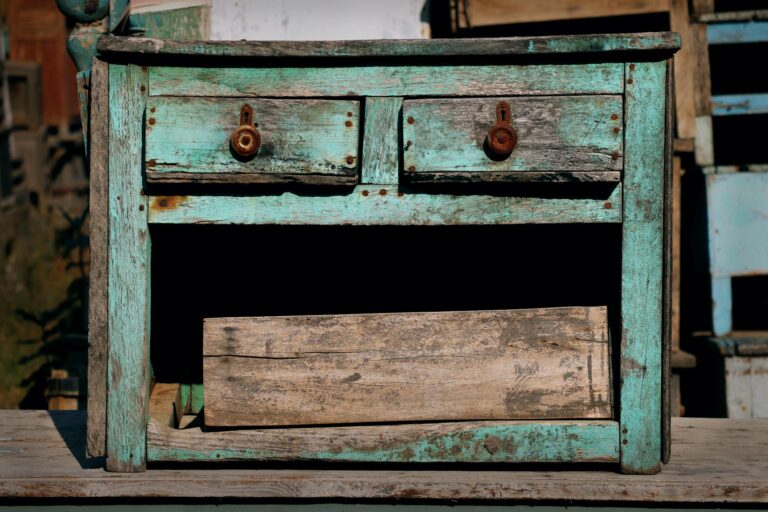
Here's where milk paint gets magical. On raw or lightly prepped wood, milk paint naturally chips and crackles as it dries — you'll get authentic flaky areas that look like a 100-year-old piece. It's gorgeous on primitive furniture, farmhouse tables, old benches.
Chalk paint doesn't self-distress. You have to sand the edges manually. If you want that look, my how to distress painted furniture guide walks through it. But chalk-painted pieces look more like "painted furniture" and milk-painted pieces look more like "found it in a barn."
Both need to be sealed. Chalk paint gets wax or matte poly. Milk paint traditionally gets hemp oil or tung oil, which deepens the color and feels amazing under your hand.
In my experience, sealed chalk paint is slightly more durable for everyday pieces — dressers, kitchen cabinets, coffee tables. Milk paint with oil is durable but softer, and it develops a patina over time that I find charming and some people find annoying.
The Rust-Oleum chalk paint is genuinely the best budget pick — I use it on every flip that's going to Facebook Marketplace. Splurge on the Annie Sloan for keeper pieces in your own house.
Some flippers do a milk paint base coat, then a chalk paint top coat in a different color, then sand the edges to reveal the milk paint underneath. Multi-layered, custom, looks like you found it at an antique shop. Biscuit (my rescue mutt) is usually "supervising" from the doorway when I do this, which means lying in the exact spot I need to walk through.
Milk paint has a steeper learning curve. Your first milk paint project will probably look worse than your first chalk paint project. If you've never painted furniture, start with chalk paint, do three or four pieces, then graduate to milk paint when you want that next level of character. Both have their place — it's just knowing which piece deserves which treatment.
If you tackled this, send me a photo. Seriously.
Tag me @diy.queen or email [email protected]